> ## Documentation Index
> Fetch the complete documentation index at: https://docs-dev-docs-event-stream-action-templates.mintlify.site/llms.txt
> Use this file to discover all available pages before exploring further.
# LoginPassword
> Describes all the properties and methods available to customize the Universal Login `login-password` screen.
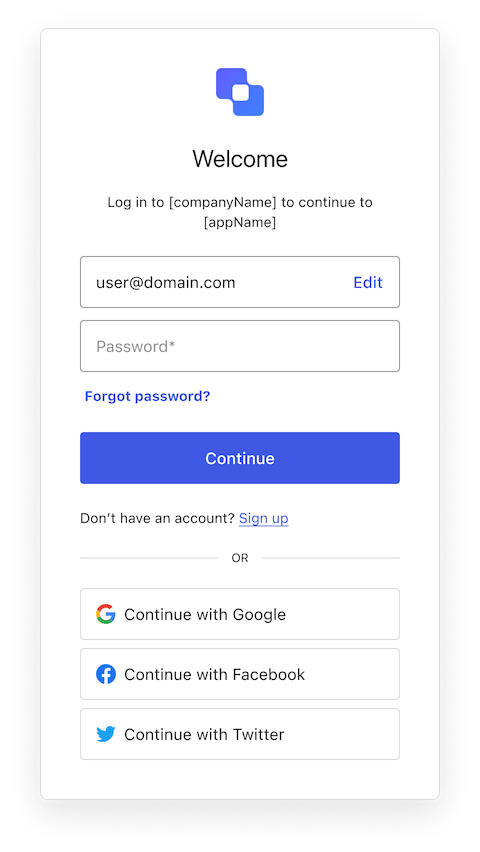
The LoginPassword class implements the `login-password` screen functionality. This screen collects the user's identifier and password.
 ## Constructors
Create an instance of LoginPassword screen manager:
```typescript Example theme={null}
import LoginPassword from "@auth0/auth0-acul-js/login-password";
const loginPasswordManager = new LoginPassword();
loginPasswordManager.login({
username: "testUser",
password: "testPassword"
});
```
## Properties
BrandingMembers}>
Provides branding-related configurations, such as branding theme and settings.
ClientMembers}>
Provides client-related configurations, such as `id`, `name`, and `logoUrl`, for the `login-password` screen.
OrganizationMembers}>
Provides information about the user's Organization, such as `id` and `name`.
PromptMembers}>
Contains data about the current prompt in the authentication flow.
ScreenMembersOnLoginPassword}>
Contains details specific to the `login-password` screen, including its configuration and context.
TenantMembers}>
Contains data related to the tenant, such as `id` and associated metadata.
TransactionMembersOnLoginPassword}>
Provides transaction-specific data for the `login-password` screen, such as active identifiers and flow states.
UntrustedDataMembers}>
Handles untrusted data passed to the SDK, such as user input during login.
UserMembers}>
Details of the active user, including `username`, `email`, and `roles`.
## Methods
This method changes the display language of the Universal Login page.
```typescript Example theme={null}
import LoginPassword from "@auth0/auth0-acul-js/login-password";
const loginPasswordManager = new LoginPassword();
loginPasswordManager.changeLanguage({
language: 'fr',
});
```
**Method Parameters**
[LanguageChangeOptions](/docs/libraries/acul/js-sdk/Screens/interfaces/LanguageChangeOptions).
The locale code for the desired language (for example, `'en'`, `'fr'`, `'es'`).
When set to `'session'`, the selected language persists for the duration of the session.
Additional custom fields prefixed with `ulp-` (for example, `'ulp-custom-field'`).
This method redirects the user to the social or enterprise identity provider (IdP) for authentication.
```typescript Example theme={null}
import LoginPassword from "@auth0/auth0-acul-js/login-password";
const loginPasswordManager = new LoginPassword();
loginPasswordManager.federatedLogin({
connection: "google-oauth2"
});
```
**Method Parameters**
[FederatedLoginPayloadOptions](/docs/libraries/acul/js-sdk/Screens/interfaces/FederatedLoginPayloadOptions).
The social connection name to use.
Error[]}>
This method retrieves the array of transaction errors from the context, or an empty array if none exist. An array of error objects from the transaction context.
This method authenticates the user based on the identifier and provided password.
```typescript Example theme={null}
import LoginPassword from "@auth0/auth0-acul-js/login-password";
const loginPasswordManager = new LoginPassword();
loginPasswordManager.login({
username: "testUser",
password: "testPassword"
});
```
**Method Parameters**
[LoginPayloadOptions](/docs/libraries/acul/js-sdk/Screens/interfaces/LoginPayloadOptions).
The user's identifier.
The user's password.
The captcha code or response from the captcha provider. This property is required if your Auth0 tenant has [Bot Detection](/docs/secure/attack-protection/bot-detection) enabled.
Additional custom fields prefixed with `ulp-` (for example, `'ulp-custom-field'`).
This method switches between a database connection (password) and a passwordless connection (Email/SMS OTP).
```typescript Example theme={null}
import LoginPassword from "@auth0/auth0-acul-js/login-password";
const loginPasswordManager = new LoginPassword();
loginPasswordManager.switchConnection({
connection: "email"
});
```
**Method Parameters**
[SwitchConnectionOptionsLoginPassword](/docs/libraries/acul/js-sdk/Screens/interfaces/SwitchConnectionOptionsLoginPassword).
The connection name to switch to. Use `'email'` or `'sms'` for passwordless, or a DB connection name for password-based authentication.
Additional custom fields prefixed with `ulp-` (for example, `'ulp-custom-field'`).
## Constructors
Create an instance of LoginPassword screen manager:
```typescript Example theme={null}
import LoginPassword from "@auth0/auth0-acul-js/login-password";
const loginPasswordManager = new LoginPassword();
loginPasswordManager.login({
username: "testUser",
password: "testPassword"
});
```
## Properties
BrandingMembers}>
Provides branding-related configurations, such as branding theme and settings.
ClientMembers}>
Provides client-related configurations, such as `id`, `name`, and `logoUrl`, for the `login-password` screen.
OrganizationMembers}>
Provides information about the user's Organization, such as `id` and `name`.
PromptMembers}>
Contains data about the current prompt in the authentication flow.
ScreenMembersOnLoginPassword}>
Contains details specific to the `login-password` screen, including its configuration and context.
TenantMembers}>
Contains data related to the tenant, such as `id` and associated metadata.
TransactionMembersOnLoginPassword}>
Provides transaction-specific data for the `login-password` screen, such as active identifiers and flow states.
UntrustedDataMembers}>
Handles untrusted data passed to the SDK, such as user input during login.
UserMembers}>
Details of the active user, including `username`, `email`, and `roles`.
## Methods
This method changes the display language of the Universal Login page.
```typescript Example theme={null}
import LoginPassword from "@auth0/auth0-acul-js/login-password";
const loginPasswordManager = new LoginPassword();
loginPasswordManager.changeLanguage({
language: 'fr',
});
```
**Method Parameters**
[LanguageChangeOptions](/docs/libraries/acul/js-sdk/Screens/interfaces/LanguageChangeOptions).
The locale code for the desired language (for example, `'en'`, `'fr'`, `'es'`).
When set to `'session'`, the selected language persists for the duration of the session.
Additional custom fields prefixed with `ulp-` (for example, `'ulp-custom-field'`).
This method redirects the user to the social or enterprise identity provider (IdP) for authentication.
```typescript Example theme={null}
import LoginPassword from "@auth0/auth0-acul-js/login-password";
const loginPasswordManager = new LoginPassword();
loginPasswordManager.federatedLogin({
connection: "google-oauth2"
});
```
**Method Parameters**
[FederatedLoginPayloadOptions](/docs/libraries/acul/js-sdk/Screens/interfaces/FederatedLoginPayloadOptions).
The social connection name to use.
Error[]}>
This method retrieves the array of transaction errors from the context, or an empty array if none exist. An array of error objects from the transaction context.
This method authenticates the user based on the identifier and provided password.
```typescript Example theme={null}
import LoginPassword from "@auth0/auth0-acul-js/login-password";
const loginPasswordManager = new LoginPassword();
loginPasswordManager.login({
username: "testUser",
password: "testPassword"
});
```
**Method Parameters**
[LoginPayloadOptions](/docs/libraries/acul/js-sdk/Screens/interfaces/LoginPayloadOptions).
The user's identifier.
The user's password.
The captcha code or response from the captcha provider. This property is required if your Auth0 tenant has [Bot Detection](/docs/secure/attack-protection/bot-detection) enabled.
Additional custom fields prefixed with `ulp-` (for example, `'ulp-custom-field'`).
This method switches between a database connection (password) and a passwordless connection (Email/SMS OTP).
```typescript Example theme={null}
import LoginPassword from "@auth0/auth0-acul-js/login-password";
const loginPasswordManager = new LoginPassword();
loginPasswordManager.switchConnection({
connection: "email"
});
```
**Method Parameters**
[SwitchConnectionOptionsLoginPassword](/docs/libraries/acul/js-sdk/Screens/interfaces/SwitchConnectionOptionsLoginPassword).
The connection name to switch to. Use `'email'` or `'sms'` for passwordless, or a DB connection name for password-based authentication.
Additional custom fields prefixed with `ulp-` (for example, `'ulp-custom-field'`).