> ## Documentation Index
> Fetch the complete documentation index at: https://docs-dev-docs-event-stream-action-templates.mintlify.site/llms.txt
> Use this file to discover all available pages before exploring further.
# Login
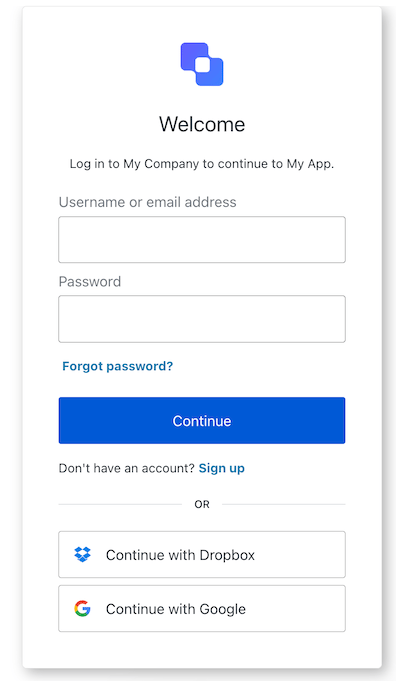
> Describes all the properties and methods available to customize the Universal Login `login` screen.
The Login class implements the `login` screen functionality. This screen collects the user's identifier and password. Depending on your tenant, this identifer can be an email, phone number, or username.
 ## Constructors
Create an instance of Login screen manager:
```typescript Example theme={null}
import Login from "@auth0/auth0-acul-js/login";
const loginManager = new Login();
loginManager.login({
username: "testUser",
password: "testPassword"
});
```
## Properties
BrandingMembers}>
Provides branding-related configurations, such as branding theme and settings.
ClientMembers}>
Provides client-related configurations, such as `id`, `name`, and `logoUrl`, for the `login` screen.
OrganizationMembers}>
Provides information about the user's Organization, such as `id` and `name`.
PromptMembers}>
Contains data about the current prompt in the authentication flow.
ScreenMembersOnLogin}>
Contains details specific to the `login` screen, including its configuration and context.
TenantMembers}>
Contains data related to the tenant, such as `id` and associated metadata.
TransactionMembersOnLogin}>
Provides transaction-specific data for the `login` screen, such as active identifiers and flow states.
UntrustedDataMembers}>
Handles untrusted data passed to the SDK, such as user input during login.
UserMembers}>
Details of the active user, including `username`, `email`, and `roles`.
## Methods
This method changes the display language of the Universal Login page.
```typescript Example theme={null}
import Login from "@auth0/auth0-acul-js/login";
const loginManager = new Login();
loginManager.changeLanguage({
language: 'fr',
});
```
**Method Parameters**
[LanguageChangeOptions](/docs/libraries/acul/js-sdk/Screens/interfaces/LanguageChangeOptions).
The locale code for the desired language (for example, `'en'`, `'fr'`, `'es'`).
When set to `'session'`, the selected language persists for the duration of the session.
Additional custom fields prefixed with `ulp-` (for example, `'ulp-custom-field'`).
This method redirects the user to the social or enterprise identity provider (IdP) for authentication.
```typescript Example theme={null}
import Login from "@auth0/auth0-acul-js/login";
const loginManager = new Login();
loginManager.federatedLogin({
connection: "google-oauth2"
});
```
**Method Parameters**
[FederatedLoginPayloadOptions](/docs/libraries/acul/js-sdk/Screens/interfaces/FederatedLoginPayloadOptions).
The social connection name to use.
Error[]}>
This method retrieves the array of transaction errors from the context, or an empty array if none exist. An array of error objects from the transaction context.
ScreenIdentifierType[] | null}>
This method returns the active identifier types for the `login` screen.
```typescript Example theme={null}
import Login from "@auth0/auth0-acul-js/login";
const loginManager = new Login();
loginManager.getLoginIdentifiers();
```
This method authenticates the user based on the identifier and provided password.
```typescript Example theme={null}
import Login from "@auth0/auth0-acul-js/login";
const loginManager = new Login();
loginManager.login({
username: "testUser",
password: "testPassword"
});
```
**Method Parameters**
[LoginPayloadOptions](/docs/libraries/acul/js-sdk/Screens/interfaces/LoginPayloadOptions).
The user's identifier.
The user's password.
The captcha code or response from the captcha provider. This property is required if your Auth0 tenant has [Bot Detection](/docs/secure/attack-protection/bot-detection) enabled.
Additional custom fields prefixed with `ulp-` (for example, `'ulp-custom-field'`).
This method redirects the user to the country code selection list, where they can update the country code prefix for their phone number.
```typescript Example theme={null}
import Login from "@auth0/auth0-acul-js/login";
const loginManager = new Login();
loginManager.pickCountryCode();
```
**Method Parameters**
[CustomOptions](/docs/libraries/acul/js-sdk/Screens/interfaces/CustomOptions).
Additional custom fields prefixed with `ulp-` (for example, `'ulp-custom-field'`).
## Constructors
Create an instance of Login screen manager:
```typescript Example theme={null}
import Login from "@auth0/auth0-acul-js/login";
const loginManager = new Login();
loginManager.login({
username: "testUser",
password: "testPassword"
});
```
## Properties
BrandingMembers}>
Provides branding-related configurations, such as branding theme and settings.
ClientMembers}>
Provides client-related configurations, such as `id`, `name`, and `logoUrl`, for the `login` screen.
OrganizationMembers}>
Provides information about the user's Organization, such as `id` and `name`.
PromptMembers}>
Contains data about the current prompt in the authentication flow.
ScreenMembersOnLogin}>
Contains details specific to the `login` screen, including its configuration and context.
TenantMembers}>
Contains data related to the tenant, such as `id` and associated metadata.
TransactionMembersOnLogin}>
Provides transaction-specific data for the `login` screen, such as active identifiers and flow states.
UntrustedDataMembers}>
Handles untrusted data passed to the SDK, such as user input during login.
UserMembers}>
Details of the active user, including `username`, `email`, and `roles`.
## Methods
This method changes the display language of the Universal Login page.
```typescript Example theme={null}
import Login from "@auth0/auth0-acul-js/login";
const loginManager = new Login();
loginManager.changeLanguage({
language: 'fr',
});
```
**Method Parameters**
[LanguageChangeOptions](/docs/libraries/acul/js-sdk/Screens/interfaces/LanguageChangeOptions).
The locale code for the desired language (for example, `'en'`, `'fr'`, `'es'`).
When set to `'session'`, the selected language persists for the duration of the session.
Additional custom fields prefixed with `ulp-` (for example, `'ulp-custom-field'`).
This method redirects the user to the social or enterprise identity provider (IdP) for authentication.
```typescript Example theme={null}
import Login from "@auth0/auth0-acul-js/login";
const loginManager = new Login();
loginManager.federatedLogin({
connection: "google-oauth2"
});
```
**Method Parameters**
[FederatedLoginPayloadOptions](/docs/libraries/acul/js-sdk/Screens/interfaces/FederatedLoginPayloadOptions).
The social connection name to use.
Error[]}>
This method retrieves the array of transaction errors from the context, or an empty array if none exist. An array of error objects from the transaction context.
ScreenIdentifierType[] | null}>
This method returns the active identifier types for the `login` screen.
```typescript Example theme={null}
import Login from "@auth0/auth0-acul-js/login";
const loginManager = new Login();
loginManager.getLoginIdentifiers();
```
This method authenticates the user based on the identifier and provided password.
```typescript Example theme={null}
import Login from "@auth0/auth0-acul-js/login";
const loginManager = new Login();
loginManager.login({
username: "testUser",
password: "testPassword"
});
```
**Method Parameters**
[LoginPayloadOptions](/docs/libraries/acul/js-sdk/Screens/interfaces/LoginPayloadOptions).
The user's identifier.
The user's password.
The captcha code or response from the captcha provider. This property is required if your Auth0 tenant has [Bot Detection](/docs/secure/attack-protection/bot-detection) enabled.
Additional custom fields prefixed with `ulp-` (for example, `'ulp-custom-field'`).
This method redirects the user to the country code selection list, where they can update the country code prefix for their phone number.
```typescript Example theme={null}
import Login from "@auth0/auth0-acul-js/login";
const loginManager = new Login();
loginManager.pickCountryCode();
```
**Method Parameters**
[CustomOptions](/docs/libraries/acul/js-sdk/Screens/interfaces/CustomOptions).
Additional custom fields prefixed with `ulp-` (for example, `'ulp-custom-field'`).